When specifying a linear motion system, engineers face a fundamental choice: ball screw, flat linear servo motor, or linear shaft motor. Each technology has genuine strengths and real limitations. Making the wrong choice means years of maintenance headaches, performance compromises, or unnecessary cost.
This article provides an honest, specification-level comparison across five categories — motion quality, performance, efficiency, maintenance, and system integration. The goal isn't to declare one technology universally superior, but to give you the data needed to choose correctly for your specific application.
The three technologies covered:
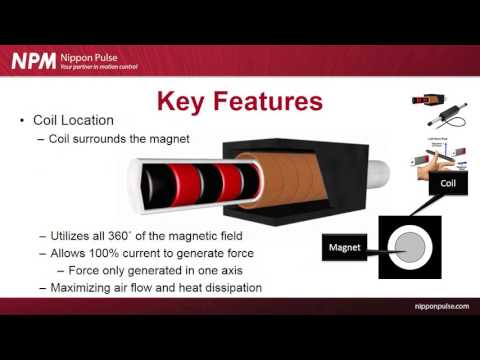
- Linear Shaft Motor (LSM) — Ironless cylindrical direct drive. The forcer surrounds the magnetic shaft, creating 360° electromagnetic coupling with zero mechanical contact.
- Ball Screw System (BS) — Rotary servo motor driving a precision ball screw and nut. High force at low cost; mechanical in nature.
- Flat Linear Servo Motor (FLM) — Iron-core flat forcer riding a permanent magnet track. High peak force; wide adoption in machine tools and gantry systems.
Motion Quality: Cogging, Smoothness, and Repeatability
Motion quality determines whether a system can execute precise, repeatable moves — especially at low velocities. This is where the three technologies diverge most dramatically.
Cogging / Force Ripple
Linear shaft motors produce zero cogging force. The ironless forcer contains no ferromagnetic material, so there is nothing for the permanent magnets to attract to. Cogging is physically impossible, not just minimized.
Flat linear servos with iron-core forcers have measurable cogging. Even well-optimized designs exhibit 2–5% force ripple, which appears as velocity disturbance at low speeds. Ball screws avoid this category — their rotary motor may have some torque ripple, but the conversion mechanism introduces a different problem: friction and backlash.
Velocity Smoothness at Low Speed
Low-speed smoothness is critical for applications like dispensing, scanning, and wafer handling. Linear shaft motors deliver true isokinetic motion even at millimeters per second because there are no friction or cogging forces to overcome. Ball screws exhibit stick-slip at low speeds due to static friction in the ball nut. Flat linear servos are better than ball screws but still affected by iron-core cogging.
Positioning Repeatability
Both linear shaft motors and flat linear servos achieve sub-micron repeatability with appropriate encoders — the non-contact drive path eliminates mechanical compliance. Ball screws are limited to micron-range repeatability due to backlash, thermal expansion of the screw, and wear over time.
Backlash
Linear shaft motors and flat linear servos have zero backlash — the drive is electromagnetic with no mechanical linkage. Ball screws inherently have backlash at the nut interface. Preloading the nut reduces backlash but increases friction and heat generation, partially defeating the purpose.
| Specification | Linear Shaft Motor | Ball Screw | Flat Linear Servo |
|---|---|---|---|
| Cogging / Force Ripple | Zero | None (screw adds backlash) | Low–Medium |
| Low-Speed Smoothness | Excellent | Good (stick-slip risk) | Good |
| Positioning Repeatability | Sub-micron | Micron range | Sub-micron |
| Backlash | Zero | Present | Zero |
Performance: Speed, Acceleration, Force, and Stroke
Performance specifications determine whether a technology can physically meet the demands of your application.
Maximum Speed
Linear shaft motors are limited only by encoder bandwidth and control system capability — speeds exceeding 4 m/s are achievable. Ball screws are severely speed-limited: the DN value (shaft diameter × RPM) creates a practical ceiling around 0.5–2 m/s for most screws. Beyond this, the screw resonates and can whip, causing bearing damage. Flat linear servos can reach 5 m/s or more depending on the model.
Acceleration
Direct drive means linear shaft motors move only their own forcer mass — there is no rotary inertia to overcome, no coupling losses. Acceleration is limited only by peak force and load mass. Ball screws must accelerate the rotary inertia of the screw itself in addition to the load, which significantly reduces achievable acceleration especially for long screws. Flat linear servos offer high acceleration but are limited by the mass of the iron-core forcer.
Thrust Force
This is where ball screws hold a genuine advantage. The mechanical advantage of a lead screw converts moderate rotary torque into very high linear force at low cost. Linear shaft motors top out around 950 N continuous for standard models (custom designs go higher). Flat linear servos with iron-core designs can reach several kilonewtons. For high-force pressing, forming, or clamping applications, ball screws often win on cost per newton.
Stroke Length
Linear shaft motors have essentially unlimited stroke — the shaft length defines the travel, and multi-shaft configurations enable extremely long runs. Ball screws have a hard practical limit around 3–4 m due to shaft sag and resonance. Flat linear servos scale well: the magnet track can be extended indefinitely at reasonable cost.
| Specification | Linear Shaft Motor | Ball Screw | Flat Linear Servo |
|---|---|---|---|
| Maximum Speed | 4+ m/s | 0.5–2 m/s | 5+ m/s |
| Acceleration | Very High | Moderate | High |
| Thrust Force | Up to 950 N continuous | Very High | Up to several kN |
| Stroke Length | Unlimited | Max ~3–4 m practical | Very Long |
Efficiency and Thermal Performance
Energy efficiency and heat generation affect operating cost, cooling system design, and long-term reliability. The differences between these technologies are significant.
Energy Efficiency
University studies have validated that linear shaft motors consume approximately 50% less energy than comparable flat linear servo motors under equivalent load and duty cycle conditions. The primary reasons are the ironless design (no iron-core eddy current losses) and the cylindrical architecture (360° flux coupling means lower current needed for the same force).
Ball screws are mechanically efficient (~90% at the screw interface) but the rotary servo motor adds its own losses. At high duty cycles with frequent acceleration and braking, the total system efficiency of a ball screw drive is often lower than a well-designed linear motor.
Heat Generation
Less current for the same force means linear shaft motors run cooler. The cylindrical geometry also provides more surface area for natural convection compared to a flat forcer of equivalent volume. Flat linear servo motors with iron cores retain significantly more heat and often require forced cooling or chilled water for high-duty-cycle applications. This adds cost and complexity to the machine design.
Thermal Error
Ball screw thermal expansion is a major source of positioning error in precision machines. As the screw heats under load, it elongates. A 1°C temperature rise in a 1-meter steel screw produces about 12 μm of expansion — sufficient to cause significant positioning error in precision applications. Linear shaft motors and flat linear servos both use linear encoders that directly measure stage position, compensating thermal effects automatically.
Maintenance, Wear, and Lifetime
Maintenance costs and unplanned downtime are often the deciding factor in total cost of ownership calculations. The differences here are substantial.
Wear Parts and Lubrication
Linear shaft motors and flat linear servo motors are both non-contact drives — the motor mechanism itself has no wear parts. The only maintenance item is the linear guide rail bearing, which is a commodity item and separate from the motor selection. Ball screws require periodic ball nut replacement (typical life 5,000–20,000 hours depending on load, speed, and lubrication), regular relubrication, and wiper/seal replacement. In cleanroom or food-safe environments, lubrication requirements create significant compliance overhead.
Contamination Sensitivity
Ball screws are acutely sensitive to contamination. Particles in the ball nut accelerate wear dramatically; proper sealing and wipers add cost and complexity. Flat linear servo motors expose the magnet track and attract ferrous debris — a problem in any environment with metal swarf or particles. Linear shaft motors present the best contamination resistance: the sealed cylindrical shaft protects the magnet assembly, and there are no exposed ball mechanisms.
Mechanical Lifetime
With no contact between the forcer and shaft, linear shaft motors have infinite mechanical drive lifetime. The motor mechanism simply cannot wear out. Ball screws have a finite statistical life, and a failed ball nut during production causes unplanned downtime. In semiconductor and medical applications where uptime is critical, this distinction is not academic — it is a production risk that must be quantified and managed.
| Specification | Linear Shaft Motor | Ball Screw | Flat Linear Servo |
|---|---|---|---|
| Wear Parts | None | Ball nut, seals | None |
| Lubrication | Not required | Regular grease/oil | Not required |
| Mechanical Lifetime | Infinite | 5,000–20,000 hrs | Infinite |
| Contamination Risk | Low | High | Medium |
System Integration and Total Cost of Ownership
The cost comparison between these technologies changes significantly when you look beyond purchase price to total cost of ownership over the machine's operating life.
System Complexity
A linear shaft motor system consists of four components: forcer, shaft, linear guide rail, and encoder. A ball screw system requires a rotary servo motor, flexible coupling, screw, ball nut, end supports, and encoder — six to eight components with multiple alignment requirements. Each additional interface is a potential source of misalignment error and a failure point. Flat linear motors fall between the two in complexity.
Physical Footprint
The cylindrical form factor of linear shaft motors opens machine design possibilities that flat motors cannot match. The shaft can run through a hollow structure. Two shafts through a single forcer create native parallel drive capability for gantry systems without complex synchronization. Ball screw assemblies are the bulkiest of the three options, with the rotary motor adding significant length to the drive axis.
Initial vs. Total Cost
Ball screws have the lowest initial cost — a clear advantage for cost-sensitive applications. Linear shaft motors carry a higher upfront price. However, a rigorous 5-year TCO analysis typically reverses this conclusion for high-duty applications:
- Ball screw costs over 5 years: 2–3 ball nut replacements, regular lubrication maintenance, potential screw replacement, unplanned downtime events
- Linear shaft motor costs over 5 years: None beyond the linear guide rail bearing (same cost regardless of motor type chosen)
For machines running two or three shifts, the maintenance and downtime savings from a linear shaft motor routinely exceed the initial cost premium within 18–24 months.
Application-by-Application Recommendations
The right technology depends entirely on your application requirements. Here is guidance for the most common scenarios:
Semiconductor Wafer Handling → Linear Shaft Motor
Cleanroom compatibility is non-negotiable. Zero particulate generation, no lubrication, zero cogging for smooth wafer motion, and infinite life without maintenance windows make LSM the only practical choice at this precision level.
High-Force Pressing or Stamping → Ball Screw
When the application demands maximum force and speed is not critical, mechanical advantage wins. Ball screws deliver very high force per dollar — no linear motor competes at extreme force requirements on a pure cost basis.
Laser Cutting and High-Speed Scanning → Linear Shaft Motor
Exceptional acceleration, smooth isokinetic motion at high velocity, and the compact cylindrical form factor that fits inside gantry structures. The speed ceiling of ball screws eliminates them from consideration; LSM beats flat linear motors on efficiency and smoothness.
Medical Device Dispensing → Linear Shaft Motor
Sub-micron repeatability, zero cogging for ultra-smooth low-speed dispense motion, and no lubrication in contact with medical equipment. No other technology offers this combination.
Long-Stroke Pick and Place (over 3 m) → Flat Linear Motor
The magnet track of a flat linear motor scales economically to long distances. Ball screws become impractical beyond 3–4 m; LSM shaft length and sag become engineering challenges at extreme strokes.
EV Battery Testing and Dynamic Force Control → Linear Shaft Motor
Precise force control, high-speed dynamic response, and native parallel drive capability for symmetric loading make LSM the right choice for sophisticated test-stand applications.
Conclusion
No single technology wins every application. Ball screws remain the best choice for high-force, low-speed, cost-sensitive applications where maintenance overhead is acceptable. Flat linear servo motors occupy a middle ground — higher force density than LSM, better precision than ball screws, with moderate maintenance requirements. Linear shaft motors lead on motion quality, efficiency, cleanliness, and long-term total cost of ownership for precision automation at speed.
The decision framework is straightforward: if your application requires sub-micron precision, smooth low-speed motion, high duty cycle, or cleanroom operation, linear shaft motors are the defensible engineering choice. If your budget is constrained and force requirements are the primary driver, ball screws remain a mature and cost-effective solution.
For a side-by-side specification table covering all 16 comparison points discussed in this article, see the full interactive comparison page. To discuss your specific application, Nippon Pulse America's engineering team offers free application consultation — bring your load, speed, and accuracy requirements and we'll help you size the right motor.