Linear Shaft Motor
vs Ball Screw vs Linear Servo
A rigorous side-by-side evaluation across motion quality, speed, maintenance, thermal performance, and total cost of ownership — so you can choose the right technology for your application.
Traditional Ball Screw
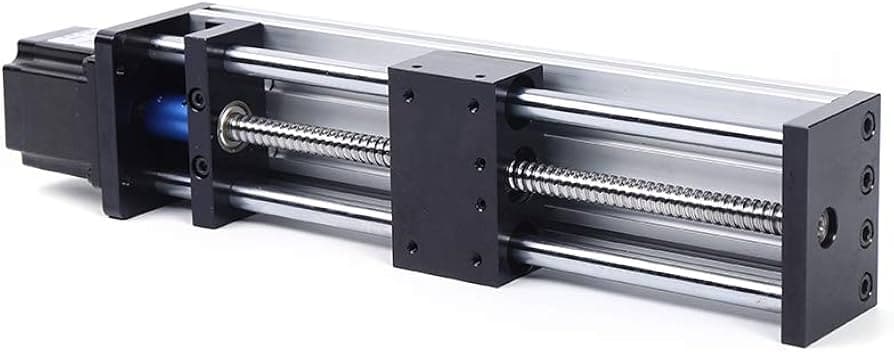
Ball Screw Actuator
Friction · Backlash · Regular Maintenance
Linear Shaft Motor
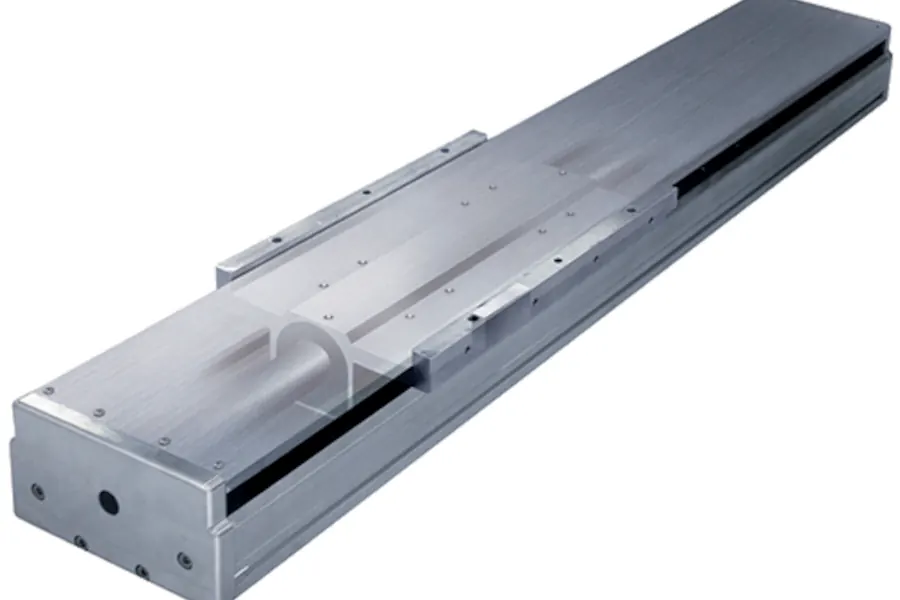
Linear Shaft Motor Stage
Zero Backlash · Contactless · Maintenance-Free
Motion Quality
| Specification | Linear Shaft MotorNippon Pulse LSM | Ball Screw SystemRotary servo + screw | Flat Linear ServoIron-core direct drive |
|---|---|---|---|
| Cogging / Force Ripple | Zero Ironless design — no cogging possible | None* Rotary motor may have ripple; screw adds backlash | Low–Medium Iron-core designs have measurable cogging force |
| Velocity Smoothness | Excellent True isokinetic motion, even at very low speeds | Good Limited by lead screw friction and stick-slip at low speed | Good Better than ball screw; iron-core adds some ripple |
| Positioning Repeatability | Sub-micron No mechanical compliance or backlash in drive path | Micron range Affected by backlash, thermal expansion, wear | Sub-micron Comparable to LSM with proper encoder |
| Backlash | Zero Non-contact electromagnetic drive — no mechanical linkage | Present Inherent in nut/screw interface; preload reduces but adds friction | Zero Direct drive — no mechanical backlash |
Performance
| Specification | Linear Shaft MotorNippon Pulse LSM | Ball Screw SystemRotary servo + screw | Flat Linear ServoIron-core direct drive |
|---|---|---|---|
| Maximum Speed | Up to 10 m/s+ Limited only by encoder and control bandwidth | 0.5–2 m/s Lead, DN value, and resonance limit practical speeds | Up to 5 m/s+ High speed capable; depends on model |
| Acceleration | Very High No inertia mismatch — forcer mass only | Moderate Rotary inertia of screw limits acceleration | High Direct drive, but heavier iron-core forcer |
| Thrust Force | Up to 950 N continuous Scales with forcer length; custom models available | Very High Mechanical advantage gives high force at lower cost | Up to several kN Iron-core designs offer higher peak force |
| Stroke Length | Unlimited* Shaft length determines stroke; multi-shaft setups possible | Limited by whip Long screws sag and resonate; typically max 3–4 m practical | Very Long Magnet track can be extended indefinitely |
Efficiency & Thermal
| Specification | Linear Shaft MotorNippon Pulse LSM | Ball Screw SystemRotary servo + screw | Flat Linear ServoIron-core direct drive |
|---|---|---|---|
| Energy Efficiency | ~50% better University-validated vs. comparable flat linear motors | Good High mechanical efficiency (~90%) but rotary motor adds losses | Baseline Iron-core losses reduce efficiency vs. ironless designs |
| Heat Generation | Low Lower current draw + cylindrical heat dissipation = cooler operation | Low–Medium Rotary servo is efficient; friction generates some heat | Medium–High Iron-core designs retain more heat; may require cooling |
| Thermal Expansion Effect | Minimal Direct encoding compensates; no mechanical chain to expand | Significant Screw thermal growth directly affects position accuracy | Minimal Linear encoder compensates thermal effects |
Maintenance & Lifetime
| Specification | Linear Shaft MotorNippon Pulse LSM | Ball Screw SystemRotary servo + screw | Flat Linear ServoIron-core direct drive |
|---|---|---|---|
| Wear Parts | None Completely non-contact — only linear guide wears (separate) | Ball nut, seals Requires periodic replacement; contamination-sensitive | None Non-contact drive; guide rail wears separately |
| Lubrication Required | No Motor itself needs zero lubrication | Yes Regular grease/oil required; contamination risk | No Motor itself is non-contact |
| Mechanical Lifetime | Infinite No contact between forcer and shaft — unlimited electrical life | 5,000–20,000 hrs Depends on load, speed, lubrication, contamination | Infinite Non-contact drive; guide defines practical lifetime |
| Contamination Sensitivity | Low Sealed shaft; no exposed ball mechanisms | High Particles contaminate ball nut; requires wipers and seals | Medium Exposed magnet track collects metal debris |
System & Integration
| Specification | Linear Shaft MotorNippon Pulse LSM | Ball Screw SystemRotary servo + screw | Flat Linear ServoIron-core direct drive |
|---|---|---|---|
| System Complexity | Simple Forcer + shaft + linear guide + encoder = done | Complex Rotary motor + coupling + screw + nut + support bearings | Moderate Forcer + magnet track + linear guide + encoder |
| Package Size / Profile | Very compact Cylindrical form factor fits where flat motors cannot | Bulky Rotary motor adds length; overall assembly is large | Flat profile Low height but wide; magnet track takes space |
| Multi-axis / Parallel Drive | Native Two shafts, one forcer = inherent parallel drive capability | Difficult Requires synchronization of two separate assemblies | Possible Requires careful alignment of dual motor tracks |
| Initial Cost | Medium–High Higher upfront; offset by zero maintenance and longer life | Low–Medium Lowest initial cost of the three options | High Magnet track material cost adds up at long strokes |
| Total Cost of Ownership | Lowest* No replacement parts, no downtime, no lubrication over life | Medium–High Ongoing lubrication, part replacement, and downtime costs | Medium Low maintenance; magnet track cost at long strokes |
Use Case Recommendations
Not sure which technology fits your application? Here's how the three options stack up for common real-world scenarios.
Application
Semiconductor Wafer Handling
Cleanroom compatibility, zero particulate generation, zero cogging for smooth wafer motion, and infinite life without maintenance windows.
Application
High-Force Pressing / Stamping
Mechanical advantage delivers very high force at lower cost. Speed is not the priority — force density per dollar is.
Application
Laser Cutting / Scanning at Speed
Exceptional acceleration, isokinetic motion at high velocity, and compact cylindrical form fit inside gantry systems.
Application
Medical Device Dispensing
Sub-micron repeatability, zero cogging for ultra-smooth low-speed dispense motion, and no lubrication in sensitive environments.
Application
Long-Stroke Pick & Place (>3m)
Magnet track scales economically to long distances. Ball screws are impractical; LSM shaft length becomes a challenge.
Application
EV Battery Test / Force Control
Precise force control, high-speed dynamic response, and parallel drive capability for symmetric loading.
Summary Scorecard
Linear Shaft Motor
Ball Screw
Flat Linear Motor
Ball screws remain the best choice for high-force, low-speed, cost-sensitive applications. For precision, speed, cleanliness, and long-term TCO — linear shaft motors lead.
Ready to Specify a Linear Shaft Motor?
Download the free engineering guide to learn how to select the right model for your stroke, force, and speed requirements — or browse our technical video library.
Replacing Traditional Actuators?
Linear Actuator & Servo Motor Replacement Guide
Already using a pneumatic actuator, servo cylinder, or traditional servo motor? See exactly how the Linear Shaft Motor solves the problems engineers hit most — stroke limits, maintenance, force ripple, and positioning accuracy.