The first question engineers ask when evaluating linear shaft motors is usually about price. The honest answer: linear shaft motors cost more upfront than ball screws or belt drives. The complete answer requires looking at total cost of ownership — and the math often surprises engineers who have only compared purchase prices.
This guide covers realistic price ranges for linear shaft motor systems, the factors that determine cost, how to calculate total cost of ownership versus alternatives, and the applications where the ROI calculation strongly favors direct drive.
Linear Shaft Motor Price Ranges
Linear shaft motor systems span a wide price range depending on force capacity, stroke length, and included components. As a general guide for budgeting purposes:
| System Size | Continuous Force | Approximate Price Range | Typical Application |
|---|---|---|---|
| Small | 10-50 N | $800 – $2,500 | Lab automation, small pick-and-place |
| Medium | 50-200 N | $2,500 – $6,000 | Electronics assembly, inspection |
| Large | 200-500 N | $6,000 – $15,000 | Semiconductor equipment, medical |
| High-force | 500+ N | $15,000+ | Industrial gantry, machining |
Note: These are motor-only prices. Complete system cost includes servo drive, linear guide, encoder, cables, and controller — typically adding 1.5-3x the motor cost.
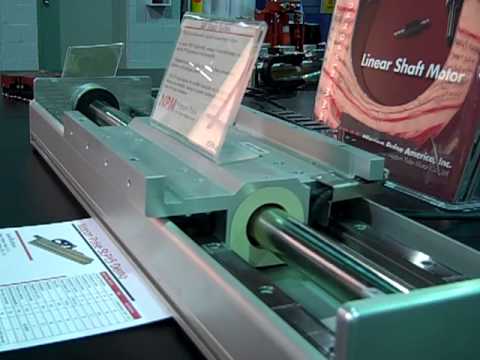
Nippon Pulse America's SLP-series integrated linear stages bundle motor, guide, and encoder into a single assembly, often reducing integration cost significantly for smaller applications.
What Determines Linear Shaft Motor Cost
Several factors drive the price of a linear shaft motor:
Force Capacity (Biggest Factor)
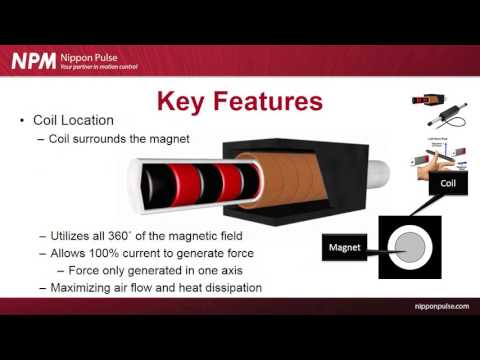
Force capacity is the primary cost driver. Higher force requires more copper in the forcer and stronger magnets in the shaft. Doubling force capacity roughly doubles motor cost.
Stroke Length
Longer shafts cost more due to more permanent magnets and precision grinding requirements. Motors requiring multi-meter strokes may need shaft support bearings to prevent deflection, adding cost.
Environmental Rating
Standard motors, cleanroom-rated motors (with sealed bearings and vacuum-compatible materials), and vacuum-rated motors (with special coatings and outgassing-tested materials) carry progressively higher costs.
Force Constant and Motor Constant
Higher motor constant (force per square root of power dissipated) motors are more expensive to manufacture but deliver better thermal efficiency. For high-duty-cycle applications, the premium pays for itself in reduced amplifier and cooling requirements.
Certification and Testing
Medical-grade motors with biocompatibility certifications, ATEX-rated motors for explosive atmospheres, and motors with special quality documentation command premiums.
Total Cost of Ownership: The Complete Picture
Purchase price is only one component of what a motor costs you over its service life. A 5-year total cost of ownership (TCO) analysis typically includes:
| Cost Category | Ball Screw System | Linear Shaft Motor |
|---|---|---|
| Initial purchase | $500 – $3,000 | $2,500 – $15,000 |
| Installation labor | Medium (alignment critical) | Low (self-contained) |
| Annual lubrication | $200 – $500/year | $0 |
| Replacement interval | 3-5 years typical | Unlimited (no wear) |
| Downtime cost (replacements) | $500 – $5,000+ per event | $0 |
| Energy cost (5 yr, 8hr/day) | Baseline | 50% reduction typical |
| Yield impact (precision) | Baseline | Higher yield in precision apps |
For a machine running 8 hours per day in a production environment, the zero-maintenance characteristic of linear shaft motors eliminates a replacement cost of $1,000 – $8,000 every 3-5 years. In semiconductor or medical applications where machine downtime costs $5,000 – $50,000 per hour, this calculation changes dramatically.
When the ROI Strongly Favors Linear Shaft Motors
The ROI calculation favors linear shaft motors most strongly when:
High machine utilization — Machines running 16-24 hours per day accumulate wear on ball screws rapidly. A ball screw that lasts 5 years at 8 hours/day may need replacement every 18 months at 24 hours/day. Linear shaft motors have no wear, so utilization has no effect on service life.
Downtime is expensive — In semiconductor fabs, medical facilities, and high-volume production, unplanned downtime costs far outweigh motor purchase price. A single unplanned outage can cost more than the entire motor system.
Precision requirements are high — Ball screws degrade in precision as they wear. If your application requires consistent precision over thousands of hours, linear shaft motors maintain specification indefinitely while ball screws require periodic compensation or replacement.
High duty cycle thermal loads — Ball screws generate heat at the nut/screw interface that must be managed. Linear shaft motors' 50% better efficiency means less heat to manage, reducing cooling system requirements.
Cleanroom or vacuum operation — Ball screws require lubrication that contaminates cleanrooms and is incompatible with vacuum environments. Linear shaft motors operate without lubricants, eliminating contamination risk and enabling semiconductor and life science applications impossible with ball screws.
When Ball Screws or Other Options May Be Better Value
Honest engineering analysis requires acknowledging when direct drive is not the right choice:
- Low duty cycle, non-critical applications — If a machine runs 1-2 hours per day and precision requirements are modest (>10 µm), ball screw TCO is often lower
- Very high force requirements on a tight budget — Ball screws can generate very high forces (thousands of Newtons) at lower cost than equivalent direct-drive systems
- Long stroke, lower precision — For strokes over 3-4 meters with modest precision requirements, other technologies may be more cost-effective
- Prototype or short-run machines — If a machine will only run for a year before redesign, the TCO advantage of direct drive doesn't fully materialize
The right answer depends on your specific duty cycle, precision requirements, environmental constraints, and the true cost of downtime for your application.
Conclusion
Linear shaft motors cost more to purchase than ball screws — that's a straightforward fact. But total cost of ownership tells a different story for any application with high utilization, precision requirements, environmental constraints, or significant downtime costs.
The zero-maintenance, zero-wear design of linear shaft motors means the purchase price is the only significant cost. Ball screws, belts, and other mechanical drives continue accumulating maintenance and replacement costs for their entire service life — often exceeding the price premium of direct drive within 2-3 years.
Nippon Pulse America's engineering team is available to help you run a specific TCO analysis for your application. Contact us with your duty cycle, precision requirements, and production environment to get a realistic comparison for your use case.