Every mechanical engineer understands the fundamental truth: friction causes wear, wear causes failure, and failure requires maintenance. Traditional motion systems—ball screws, lead screws, rack-and-pinion, belt drives—all rely on mechanical contact to transmit force. This contact inevitably leads to wear, requiring periodic lubrication, adjustment, and eventual component replacement.
Linear shaft motors break this cycle by transmitting force electromagnetically without any mechanical contact between moving parts. The result isn't just "low maintenance" or "extended life"—it's theoretically unlimited mechanical life. Understanding how this contactless design works reveals why linear shaft motors have become the reliability standard for critical applications.
The Wear Problem in Traditional Motion Systems
All traditional motion systems share a common limitation: they transmit force through mechanical contact, and mechanical contact generates friction.
Ball Screw Systems:
- Ball-to-race contact creates Hertzian contact stress
- Typical life: 10,000-50,000 km of travel before nut replacement
- Requires continuous lubrication (grease or oil)
- Wear particles contaminate clean environments
- Preload degrades over time, reducing stiffness and accuracy
Belt Drive Systems:
- Belt-to-pulley friction causes belt wear and stretching
- Typical life: 5,000-20,000 km before belt replacement
- Requires periodic tension adjustment
- Belt teeth can skip under high acceleration
- Limited to moderate force applications
Rack and Pinion Systems:
- Tooth-to-tooth sliding contact causes wear
- Typical life: 20,000-100,000 km with proper lubrication
- Requires continuous lubrication
- Backlash increases as teeth wear
- Lubrication contaminates environment
The economic and operational costs of mechanical wear are substantial:
- Scheduled maintenance downtime — Production stops for lubrication and inspection
- Unscheduled failure downtime — Unexpected wear failures halt operations
- Component replacement costs — Ball screw nuts, belts, bearings must be replaced periodically
- Labor costs — Maintenance requires skilled technicians
- Contamination control — Lubricants and wear particles compromise clean environments
- Performance degradation — Accuracy and repeatability degrade as components wear
How Linear Shaft Motors Eliminate Contact
Linear shaft motors operate on electromagnetic principles that require no mechanical contact for force transmission:
Electromagnetic Force Generation:
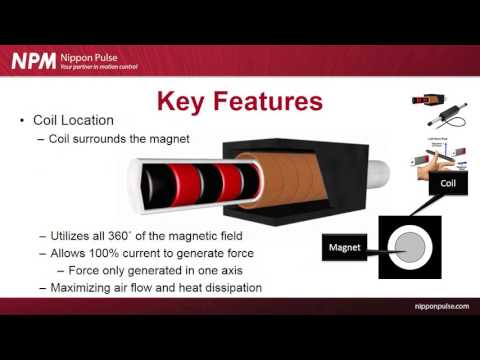
When electrical current flows through the copper coils in the forcer, it creates a magnetic field. This field interacts with the permanent magnetic field from the shaft magnets. The interaction of these two fields generates axial force through Lorentz force principles:
F = B × I × L
Where:
- F = Thrust force
- B = Magnetic flux density
- I = Coil current
- L = Effective length of conductor in magnetic field
This force is generated across an air gap—typically 0.5mm to 2mm—between the forcer coils and the shaft magnets. There is zero mechanical contact between these components during force transmission.
What This Means for Wear:
Because force is transmitted electromagnetically across an air gap:
- No friction between motor components (zero coefficient of friction for force transmission)
- No wear of electromagnetic surfaces
- No lubrication required for motor operation
- No wear particles generated
- No performance degradation over time
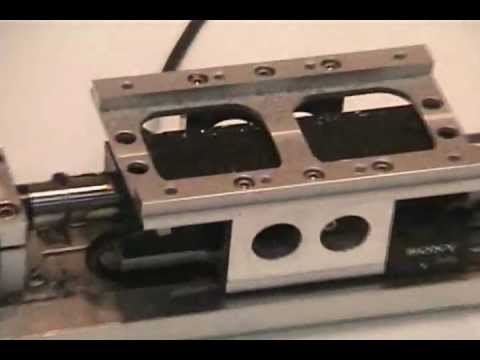
The only moving part that requires bearings is the forcer itself, which rides on precision linear bearings or air bearings. These bearings support the load and maintain the air gap but don't participate in force transmission.
Bearing Considerations: The Only Wear Point
While the electromagnetic motor components experience no wear, the linear bearings that guide the forcer do experience some wear. However, this is dramatically reduced compared to traditional systems:
Reduced Bearing Loads:
Linear shaft motors impose only the external load forces on the bearing system. Compare this to:
- Ball screws: Bearings support load PLUS bearing preload forces PLUS contact forces from power transmission
- Belt drives: Bearings support load PLUS belt tension forces
- Linear shaft motors: Bearings support load only (plus minimal radial magnetic forces in cylindrical designs, which are effectively zero due to 360° symmetry)
Lower bearing loads directly translate to longer bearing life. Bearing life follows the relationship:
L₁₀ = (C / P)³ × 10⁶ revolutions
Where:
- L₁₀ = Bearing life (90% reliability)
- C = Dynamic load rating
- P = Applied load
This cubic relationship means reducing bearing load by 50% extends bearing life by 8× (2³ = 8).
Bearing Options for Extended Life:
- Precision ball bearings: Standard option, 20,000-50,000 km life with proper lubrication
- Roller bearings: Higher load capacity, extended life for heavy-load applications
- Magnetic bearings: Completely contactless, infinite life (requires active control)
- Air bearings: Contactless operation, infinite life (requires clean compressed air)
With air bearings or magnetic bearings, the entire motion system becomes truly contactless with no wear whatsoever.
Real-World Reliability Data
The theoretical advantages of contactless operation are validated by decades of field data from semiconductor manufacturing, medical equipment, and precision metrology applications—environments where reliability is critical and failures are tracked meticulously.
Semiconductor Fab Data:
Linear shaft motors in semiconductor wafer inspection systems routinely operate for:
- 10+ years continuous operation (24/7 duty)
- 100,000+ km of travel without motor maintenance
- No performance degradation in positioning accuracy or force output
- Zero contamination events (no lubricants or wear particles)
Compare this to ball screw systems in similar applications:
- Ball screw nut replacement every 2-3 years (30,000-50,000 km)
- Preventive maintenance every 6 months (lubrication, inspection)
- Measurable degradation in positioning accuracy after 20,000 km
Medical Equipment Reliability:
CT scanners and MRI patient positioning systems using linear shaft motors:
- 15+ year service life without motor replacement
- No scheduled maintenance for motor components
- Consistent positioning accuracy throughout life
- Critical for patient safety (no unexpected failures)
Total Cost of Ownership Analysis:
Over a 10-year period, comparing ball screw vs linear shaft motor system:
Ball Screw System:
- Initial cost: $5,000
- Ball screw nut replacements (3×): $3,600
- Scheduled lubrication maintenance (20×): $4,000
- Unscheduled failure downtime (2× events, 8 hours each): $8,000
- Total 10-year cost: $20,600
Linear Shaft Motor System:
- Initial cost: $7,500
- Motor maintenance: $0
- Bearing maintenance (grease replenishment, 5×): $500
- Unscheduled failure downtime: $0
- Total 10-year cost: $8,000
The linear shaft motor system costs $12,600 less over 10 years despite higher initial cost—a 61% total cost savings.
Clean Room and Contamination-Critical Applications
Beyond cost savings, contactless operation provides unique advantages in contamination-sensitive applications:
Semiconductor Manufacturing:
- No lubricants to outgas or contaminate vacuum processes
- No particulate generation from wear
- Compatible with Class 1 clean rooms
- No organic contamination of wafers
Medical Device Manufacturing:
- No lubrication contamination of sterile environments
- Compatible with pharmaceutical clean room standards
- No particle shedding into product streams
- Simplified cleaning and sterilization protocols
Food and Pharmaceutical Processing:
- No food-grade lubricants required
- Washdown capability without lubrication concerns
- No contamination of product streams
- Compliance with FDA and USDA requirements
Vacuum Applications:
- No lubricants to outgas in vacuum
- No organic materials to contaminate vacuum chambers
- Compatible with high vacuum (10⁻⁸ Torr) environments
- Ideal for semiconductor equipment, electron microscopes, space simulation
Conclusion
The promise of "maintenance-free" operation is often exaggerated in marketing materials, but with linear shaft motors, it's fundamentally true. By transmitting force electromagnetically across an air gap rather than through mechanical contact, linear shaft motors eliminate the root cause of wear and maintenance in motion systems.
The result is theoretically unlimited motor life—constrained only by bearing life, which can itself be extended to infinite through air bearings or magnetic bearings. Even with standard precision ball bearings, linear shaft motor systems routinely achieve 10-15 years of continuous operation without maintenance, far exceeding traditional mechanical motion systems.
For applications where reliability is critical, downtime is expensive, or contamination is unacceptable, the contactless design of linear shaft motors isn't just an advantage—it's a fundamental enabler that makes the application possible.