Linear shaft motors appear wherever the demands of precision, speed, or reliability exceed what mechanical transmission systems can deliver. Understanding where they are used — and why — helps engineers identify applications in their own systems that would benefit from direct drive.
This guide covers the primary industries and specific applications where linear shaft motors are deployed, with the engineering rationale for why direct drive was chosen over alternatives.
Semiconductor Equipment: The Demanding Pioneer
Semiconductor manufacturing is arguably the most demanding application domain for motion control, and it's where linear shaft motors first proved their capabilities. Today they are standard components in semiconductor equipment worldwide.
Wafer handling and transport — Moving silicon wafers between process stations requires sub-millimeter accuracy, contamination-free operation, and smooth motion to prevent wafer damage. Linear shaft motors provide the required precision without the particles and outgassing of lubricated ball screws.
Lithography stages — Photolithography exposure systems require nanometer-level positioning accuracy while maintaining high throughput. The wafer stage must move rapidly between exposure fields and settle within nanometers in milliseconds. Zero cogging force is essential to eliminate the force disturbances that would cause settling errors.
Inspection and metrology systems — Automated optical inspection (AOI) and electron beam review systems scan wafers at high speed while maintaining imaging accuracy. Velocity ripple from cogging would blur the image or create false defect detections. Linear shaft motors' smooth motion enables accurate inspection.
Wire bonding — Connecting semiconductor die to package leads requires extremely precise positioning at high rates (multiple bonds per second). Linear shaft motors provide the combination of speed and precision required for advanced wire bonding.
Dicing and cutting — Singulating semiconductor wafers requires smooth, consistent cutting motion. Velocity ripple from conventional drives creates kerf width variations and chip-out. Linear shaft motors maintain constant cutting velocity.
Medical Devices: Precision That Protects Patients
Medical applications place unique demands on linear motion systems: they must be precise, reliable, and safe while often operating in environments incompatible with conventional lubricants.
Robotic surgery systems — Minimally invasive surgical robots require smooth, precise tool positioning with force feedback. The surgeon's hand tremor must be filtered while intended movements are translated accurately. Linear shaft motors' zero cogging force means the control system receives clean force/position signals without parasitic force noise.
Diagnostic imaging — CT scanners, PET scanners, and MRI-compatible positioning systems require smooth motion to prevent image artifacts. Any velocity ripple from the positioning system creates streak artifacts in the image, reducing diagnostic quality. Linear shaft motors provide vibration-free positioning.
Drug delivery systems — Precision infusion pumps and dispensing systems require accurate, consistent flow rates. Linear shaft motors drive the plunger with precise force control, ensuring accurate dosing even at very low flow rates where valve-based systems introduce variability.
Medical grippers and sample handling — Laboratory automation systems for sample processing, slide staining, and plate handling require gentle, precise motion. Force-controlled gripping with linear shaft motors prevents sample breakage while ensuring secure handling.
Radiation therapy positioning — Linear accelerators and proton therapy systems must position the patient and beam delivery system with sub-millimeter accuracy for treatment targeting. Linear shaft motors provide the positioning precision required for safe, effective treatment.
Electronics Assembly: Speed and Accuracy at Scale
Electronics manufacturing combines high throughput requirements with precision demands — every component placed must be accurate, and the machine must place thousands of components per hour.
Pick-and-place machines — High-speed component placement machines use linear shaft motors on X, Y, and Z axes for rapid, accurate component placement. The combination of high acceleration, precise positioning, and zero cogging enables placement rates that mechanical drive systems cannot achieve while maintaining placement accuracy.
Selective soldering — Programmatically applying solder to specific through-hole components requires precise motion to hit exact target locations while avoiding sensitive nearby components. Linear shaft motors provide the path accuracy required for selective soldering at production rates.
Solder paste inspection (SPI) — 3D optical systems that inspect solder paste deposits before component placement must scan the board rapidly while maintaining focus accuracy. The scanning stage needs smooth, precise motion to acquire accurate 3D images at production speed.
AOI (Automated Optical Inspection) — After reflow, inspection systems scan PCBs at high speed looking for defects. High-speed linear shaft motor stages enable faster throughput while maintaining the image sharpness required for reliable defect detection.
Metrology and Precision Measurement
Measurement systems require motion that doesn't introduce the errors they're trying to measure. This is a paradoxical challenge that linear shaft motors resolve through their fundamental operating principles.
Coordinate Measuring Machines (CMM) — High-accuracy CMMs probe workpiece surfaces to verify dimensional accuracy. The probe stage must move smoothly to avoid force disturbances that would deflect the probe and introduce measurement error. Linear shaft motors provide the smooth, precise motion required for measurement at submicron levels.
Surface profilometers — Instruments measuring surface roughness and form accuracy scan the stylus across the surface at controlled velocity. Any velocity ripple from the drive system creates measurement artifacts in the surface profile. Linear shaft motors enable accurate surface characterization.
Interferometry stages — Laser interferometry systems for surface or optical element characterization require nanometer-level positioning stability. The measurement stage must move in discrete steps while maintaining positional stability between steps. Linear shaft motors' zero cogging ensures the stage settles without residual oscillation.
Hardness testers — Modern automated hardness testing systems use linear shaft motors to control indenter force and depth with precision. The force control capability of direct drive enables accurate hardness testing at controlled loading rates.
Optics, Photonics, and Laser Systems
Optical applications often require the finest positioning resolution and smoothest motion of any industrial domain — photons have no tolerance for mechanical imprecision.
Laser cutting and engraving — The beam delivery system must move at constant velocity for uniform processing. Any velocity variations from cogging or mechanical resonance create variations in laser energy delivery, affecting cut quality and engraving depth.
Fiber alignment systems — Aligning optical fibers for coupling requires sub-micron positioning in three axes. Linear shaft motors on precision translation stages enable the search and lock algorithms that find optimal coupling positions in automated fiber alignment.
Lens and mirror positioning — Adaptive optics systems, telescope focus mechanisms, and optical test systems require smooth, stable positioning of optical elements. Any vibration from the positioning system degrades optical performance.
Confocal and multiphoton microscopy — High-resolution microscopy requires smooth scanning stages to acquire images without motion artifacts. Linear shaft motors enable high-speed 3D imaging while maintaining the positioning accuracy required for nanometer-scale biological imaging.
Industrial Automation: Demanding Cycle Rates
Industrial applications may not always require the ultimate in precision, but they demand reliability, speed, and consistency over millions of cycles in harsh environments.
High-speed pick-and-place — Industrial pick-and-place applications for packaging, material handling, and assembly require rapid, repeatable positioning over millions of cycles per year. Linear shaft motors' no-wear operation means the motion system performs identically on cycle 1 and cycle 10,000,000.
Web and sheet processing — Cutting, perforating, and processing continuous web materials requires precise synchronization with web speed and accurate cut placement. Linear shaft motors provide the dynamic response needed for accurate registration at high production speeds.
Printing and marking — Digital printing and laser marking systems require precise positioning of print heads or beam delivery across the work surface. Consistent motion quality ensures consistent print and mark quality across the entire work area.
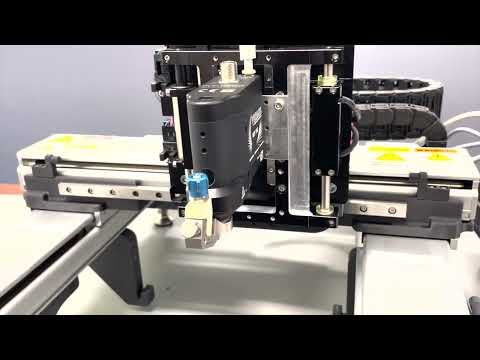
Gantry systems — Multi-axis gantry systems for assembly, inspection, or material handling use linear shaft motors on X, Y, and Z axes for coordinated, high-speed motion over large work envelopes. See the 3-axis gantry demo for a practical example.
Conclusion
The common thread across all these applications is clear: where precision, speed, reliability, or environmental constraints push beyond what mechanical transmission systems can deliver, linear shaft motors provide the solution.
The no-wear, no-lubrication, zero-cogging design isn't just a specification advantage — it's an enabler for applications that are physically impossible with conventional drives. Semiconductor lithography at sub-10nm nodes, cleanroom wafer handling, sub-micron metrology, and long-life medical devices all depend on direct drive technology.
If you recognize your application in any of these categories, Nippon Pulse America's engineering team can help you determine the right motor for your specific force, speed, stroke, and accuracy requirements.